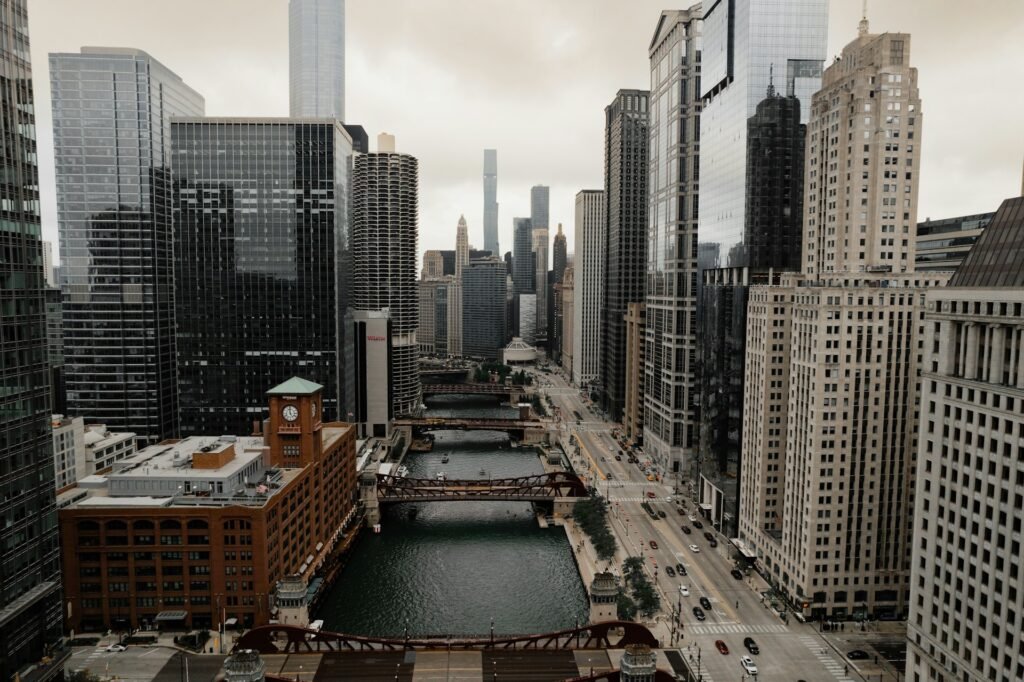
The Chicago real estate market continues to defy national trends, showing remarkable resilience and growth potential through 2025. While many coastal markets experience volatility, Chicago’s housing sector demonstrates consistent appreciation, with median home prices reaching $375,000 citywide, a 5.6% increase from 2024. For investors and homeowners seeking growth opportunities, understanding where Chicago real estate values are accelerating fastest provides crucial insight into tomorrow’s winning neighborhoods.
Current Market Overview: Chicago Real Estate in 2025
Chicago real estate has entered 2025 with remarkable momentum. According to Illinois Realtors, the city saw 22,093 home sales in 2025, essentially matching 2024’s volume while achieving significant price growth. This stability amid rising values indicates healthy demand fundamentals rather than speculative bubbles.
Key metrics reveal a seller-favorable environment:
- Median citywide price: $375,000 (up 5.6% year-over-year)
- Chicago Metro median: $379,900 (up 5.5%)
- Average days on market: 33 days in the city, 29 days metro-wide
- Inventory decline: 16% fewer homes available in Chicago year-over-year
The Chicago real estate market’s balanced nature, appreciating prices without overheating, creates optimal conditions for both immediate gains and long-term wealth building.
Neighborhoods with Fastest Rising Home Values
Uptown/Rogers Park: Leading Appreciation
The Chicago real estate standout for value growth is the combined Uptown/Rogers Park submarket, where single-family home prices surged 17.3% between Q2 2024 and Q2 2025, according to DePaul University’s Institute for Housing Studies. This dramatic appreciation reflects several factors:
- Lakefront access at more affordable price points than premium North Side neighborhoods
- Improved transit connectivity via the Red Line and lakefront bike paths
- Revitalization efforts are bringing new retail and dining options
- Relative affordability is attracting buyers priced out of Lincoln Park and Lakeview
For investors seeking Chicago real estate with momentum, this area offers proven appreciation with remaining upside potential.
South Lawndale/Brighton Park: Emerging Value
South Lawndale and Brighton Park recorded 14.9% price growth, representing the Chicago real estate market’s most dramatic turnaround story. These historically affordable Southwest Side neighborhoods benefit from:
- Transit-oriented development along the CTA Orange Line
- Proximity to Midway Airport and logistics employment centers
- First-time buyer demand seeking entry-level homes under $300,000
- Investor interest in rental properties with strong cash flow
The rapid appreciation here signals Chicago real estate maturation, as buyers expand their search beyond traditionally popular areas.
Bronzeville/Hyde Park: South Side Renaissance
The Bronzeville/Hyde Park submarket achieved 11.6% annual price growth, cementing its status as Chicago real estate’s most significant cultural and investment destination. This historic neighborhood’s resurgence is driven by:
- The Obama Presidential Center construction is generating regional interest
- University of Chicago institutional stability and employment
- National Heritage Area designation attracting cultural tourism
- Lakefront proximity with significantly lower prices than North Side alternatives
With median homes still under $350,000, Bronzeville represents Chicago real estate where cultural significance meets investment potential.
Emerging Neighborhoods for 2026
Beyond established appreciation leaders, several Chicago real estate areas show early indicators of accelerated growth:
Avondale: The Next Logan Square
Avondale has emerged as Chicago real estate’s hottest emerging market, with inventory “flying off the shelves” according to local agents. Average single-family prices of $500,000-$550,000 sit significantly below neighboring North Center and Irving Park, creating natural appreciation pressure as buyers seek value.
The neighborhood’s Blue Line accessibility, emerging restaurant scene, and proximity to DeVry and Northeastern Illinois University create diverse demand drivers. For Chicago real estate investors, Avondale offers the rare combination of current cash flow and future appreciation.
Jefferson Park: Northwest Gateway
Jefferson Park provides Chicago real estate investors with stability and growth potential. With average prices under $500,000 but steady appreciation, this transit hub (CTA Blue Line and Metra) attracts renters and buyers seeking convenience without premium pricing.
The convergence of the Edens and Kennedy expressways, combined with strong neighborhood schools, makes Jefferson Park Chicago real estate with enduring appeal for families and commuters alike.
Humboldt Park: West Side Momentum
Humboldt Park continues its transformation from overlooked to opportunistic Chicago real estate. The “West Bucktown” phenomenon spillover demand from Logan Square, has evolved into a genuine neighborhood establishment. Investors find cash flow advantages here as rents rise faster than purchase prices, improving returns while appreciation accelerates.
Pandemic-to-Present: The Long View
Examining Chicago real estate performance since Q1 2020 reveals dramatic wealth creation in previously overlooked areas. City submarkets with the highest total appreciation include:
- Englewood/Greater Grand Crossing: 106.2% increase
- Chatham/West Pullman: 82.1% increase
- Austin/North Lawndale: 75.6% increase
These South and West Side neighborhoods demonstrate Chicago real estate’s capacity for transformation, rewarding early investors with extraordinary returns while improving community stability.
Suburban vs. Urban: Diverging Trends
Chicago real estate within the city limits is currently outperforming suburban Cook County. City price levels increased 6.5% year-over-year compared to 5.2% in suburbs, with inventory declining more sharply in Chicago proper. This trend reflects:
- Return-to-office policies favoring downtown proximity
- Millennial and Gen Z preferences for walkable, transit-rich environments
- Limited new construction in established city neighborhoods
- Investor concentration in rental markets with strong tenant demand
For Chicago real estate investors, this urban premium suggests continued downtown and near-downtown outperformance.
2026 Forecast: Continued Growth
Experts predict Chicago real estate will outpace national price growth in 2026. The Institute for Housing Studies forecasts:
- Continued price appreciation driven by supply constraints
- Stable sales volume with seasonal fluctuations
- Tight inventory maintains seller advantages
- Affordability challenges are potentially limiting first-time buyer participation
Redfin chief economist Daryl Fairweather specifically predicts Chicago will outperform national markets due to relative affordability and supply constraints. Unlike coastal markets facing correction risks, Chicago real estate appears positioned for sustainable, measured growth.
Conclusion
The Chicago real estate market offers diverse opportunities for appreciation-focused buyers. From Uptown’s 17.3% annual gains to Bronzeville’s cultural renaissance and Avondale’s emerging status, the city provides options across every price tier. With median prices still 40-50% below coastal equivalents and steady demand fundamentals, Chicago represents real estate investing’s sweet spot: proven appreciation with remaining value.
For those considering Chicago real estate investment or homeownership, acting sooner captures current momentum while interest rates remain relatively stable. The neighborhoods leading today’s appreciation trends, Uptown, Bronzeville, Avondale, and Jefferson Park, offer the strongest combination of current performance and future potential in this dynamic market.
Photo by Karthik Sridasyam on Unsplash