Chicago’s real estate market continues to evolve, offering savvy investors and homebuyers numerous opportunities to find excellent value. As we look toward 2026, several neighborhoods stand out for their combination of affordability, growth potential, and quality of life. This comprehensive guide explores the best value neighborhoods in Chicago, helping you make an informed decision about where to invest or relocate.
Understanding Chicago’s Real Estate Market in 2026
The Chicago housing market has experienced notable shifts in recent years, creating pockets of exceptional value across the city. Unlike peak years, current market conditions present opportunities for buyers seeking strong investments without premium price tags. The following neighborhoods represent some of the most compelling options for those prioritizing value without sacrificing quality neighborhoods, amenities, or growth potential.
Top Value Neighborhoods to Consider
Logan Square
Logan Square continues to attract young professionals and families seeking authentic urban living. Once considered an emerging neighborhood, it has matured into an established community while maintaining reasonable prices compared to similar North Side areas. The neighborhood features exceptional dining, vibrant street art, and excellent public transportation access via the Blue Line. Recent development has strengthened residential appeal without dramatically inflating costs beyond neighboring Bucktown.
- Proximity to the 606 Trail for outdoor recreation
- Diverse restaurant and entertainment scene
- Strong community identity and cultural events
- Reliable appreciation potential
Pilsen
Pilsen represents one of Chicago’s most culturally rich neighborhoods, known for its vibrant Mexican heritage and thriving arts community. The neighborhood offers substantial value for buyers seeking character and community spirit. Recent revitalization efforts have improved infrastructure and public spaces while maintaining the neighborhood’s authentic cultural identity. Property values remain attractive compared to nearby West Loop, despite offering similar amenities and accessibility.
- Strong cultural heritage and community events
- Growing arts scene with galleries and studios
- Affordable housing stock with renovation potential
- Strategic location near downtown and multiple transit options
Avondale
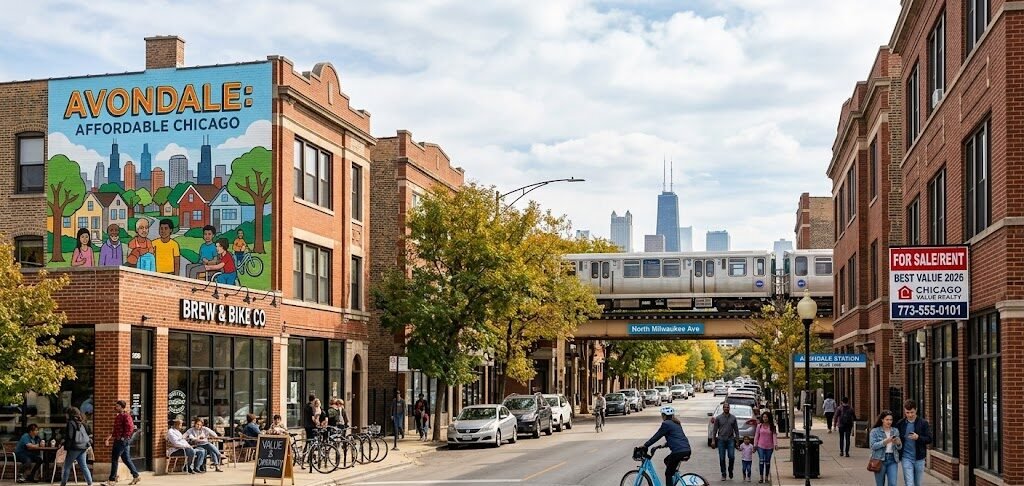
Avondale on the Northwest Side offers exceptional value for families and investors alike. This neighborhood has experienced steady, sustainable growth without the rapid gentrification and corresponding price increases seen in other Chicago communities. The area features tree-lined streets, diverse dining options, and improving retail corridors. Families particularly appreciate the strong schools and family-friendly atmosphere, while investors recognize the neighborhood’s growth trajectory.
- Family-oriented community with quality schools
- Affordability compared to nearby neighborhoods
- Ongoing development and improvement projects
- Diverse population and local businesses
West Ridge
West Ridge offers remarkable value in a well-established neighborhood with strong bones and growing appeal. Located on the North Side, this community provides excellent access to schools, parks, and the Lakefront Trail. The neighborhood has attracted attention from investors recognizing its potential for appreciation. Properties remain relatively affordable while offering solid fundamentals and community stability that appeal to long-term residents.
- Excellent park and recreation facilities
- Strong neighborhood identity and safety initiatives
- Diverse housing options and price points
- Proximity to Devon Avenue’s cultural attractions
Bridgeport
Bridgeport represents a compelling value opportunity for investors and homebuyers with vision. The South Side neighborhood offers substantial potential with properties at price points that seem undervalued relative to fundamentals. Recent community investment, improved public spaces, and growing interest from younger homebuyers signal positive momentum. Those comfortable with neighborhoods in transition appreciate the significant upside opportunity Bridgeport presents.
- Significant appreciation potential
- Strong community improvement initiatives
- Affordable housing inventory
- Growing entertainment and dining options
Hegewisch
For buyers willing to venture to the Far South Side, Hegewisch offers exceptional value with a suburban feel while maintaining city connectivity. This neighborhood appeals particularly to families seeking space, affordability, and community. While slightly removed from downtown, the area provides excellent schools, parks, and a strong sense of community identity. Property values remain among the city’s most affordable while offering solid residential quality.
- Exceptional affordability and square footage value
- Strong schools and family amenities
- Spacious lots and residential character
- Improving transit connectivity
Key Factors for Evaluating Neighborhood Value
Transportation Access
Proximity to public transportation significantly impacts neighborhood value and future appreciation potential. Neighborhoods with reliable CTA access maintain stronger long-term value and appeal to broader buyer pools. Consider both current transit options and planned improvements when evaluating potential investments.
School Quality and Family Services
For families, school quality directly influences neighborhood desirability and property values. Neighborhoods with strong public schools typically command premium prices, while those improving their educational offerings present value opportunities. Proximity to parks, libraries, and recreation facilities also contributes to neighborhood appeal and family satisfaction.
Economic Development and Employment
Neighborhoods experiencing new business investment, retail development, and employment opportunities demonstrate stronger appreciation potential. Look for signs of economic activity including new construction, business openings, and commercial investment when assessing long-term value prospects.
Community Stability and Safety
Established communities with strong neighborhood organizations, active civic engagement, and declining crime rates provide more stable investment foundations. These factors indicate healthy communities where both current residents and future buyers will feel comfortable and invested in the neighborhood’s success.
Renovation and Development Potential
Properties in neighborhoods undergoing steady improvement often represent excellent value opportunities, particularly for buyers willing to invest in renovation. Neighborhoods with reasonable property costs but improving fundamentals offer the best combination of affordability and appreciation potential.