Understanding the Post-Pandemic Housing Market Transformation
The rise of remote work during the global pandemic fundamentally altered housing preferences across major metropolitan areas, and Chicago has emerged as a prime example of this significant market shift. What began as a temporary adjustment to work arrangements has evolved into a permanent lifestyle change for many professionals, reshaping demand patterns and property values throughout the Windy City.
As companies initially implemented work-from-home policies, employees found themselves reassessing their living situations. The necessity to maintain a presence in downtown Chicago’s commercial district diminished considerably, prompting a substantial migration outward toward suburban communities and beyond. This movement has created a complex housing market characterized by shifting demand, changing price dynamics, and evolving neighborhood demographics.
The Suburban Migration Phenomenon
Chicago’s suburbs have experienced unprecedented demand as remote workers sought larger living spaces, improved quality of life, and escape from urban congestion. Communities surrounding the city have witnessed increased property values and competitive bidding wars among buyers seeking single-family homes with dedicated office spaces and outdoor amenities.
Key factors driving suburban migration include:
- Access to larger properties at more affordable price points
- Improved school systems and family-oriented community amenities
- Reduced commute stress and enhanced work-life balance
- Greater space for home offices and recreational facilities
- Lower property taxes compared to Chicago proper
Downtown Chicago’s Market Adjustment
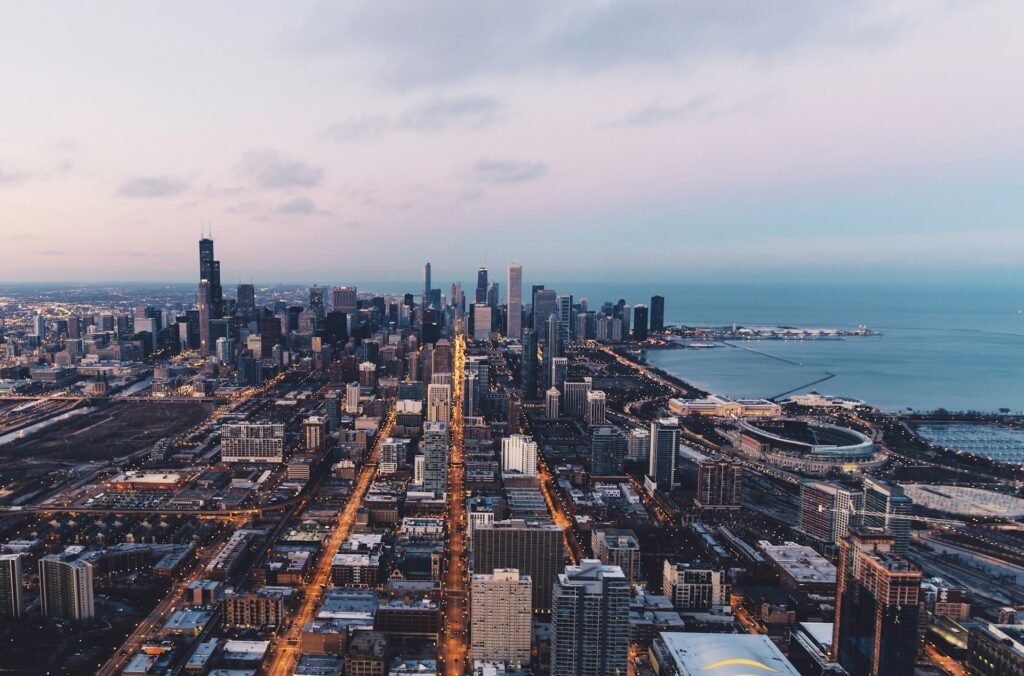
While suburban areas flourished, Chicago’s downtown and central neighborhoods experienced a marked cooling effect. The substantial reduction in office workers commuting to central business districts created decreased demand for urban residential units. Many landlords adapted by converting premium apartment listings into lower-priced offerings, attempting to retain tenants and maintain occupancy rates.
The downtown correction has had mixed implications for the broader real estate landscape. Property values in certain urban corridors stabilized after years of rapid appreciation, potentially creating new opportunities for value-conscious buyers and investors seeking long-term appreciation potential.
Inventory and Pricing Dynamics
The post-remote work boom has fundamentally altered Chicago’s housing inventory landscape. While suburban markets experienced rapid inventory depletion due to heightened demand, urban markets contended with increased listings and extended time-on-market periods for certain property categories.
Pricing patterns have similarly diverged across the metropolitan area. Suburban properties, particularly those offering home office capabilities and modern amenities, have commanded premium prices. Conversely, urban apartments without distinctive features or location advantages have experienced modest price pressures, creating a bifurcated market with distinct value propositions for different property types.
The Return-to-Office Impact
Recent corporate decisions regarding remote work policies have introduced new variables into Chicago’s housing equation. Several major employers have mandated partial or full return-to-office schedules, potentially stabilizing demand for downtown residential properties and altering migration patterns established during the pandemic boom.
However, the permanence of this shift remains uncertain. Many companies have embraced hybrid work arrangements, maintaining flexibility that continues to support suburban housing demand. This middle-ground approach may perpetuate the market diversification observed in recent years rather than reversing it entirely.
Investment Opportunities in the New Market Reality
Chicago’s transformed housing market presents distinct opportunities for different investor profiles. Real estate investors focused on suburban markets can capitalize on continued demand for single-family properties and family-oriented communities. Meanwhile, investors with longer time horizons may find undervalued opportunities in urban properties anticipating renewed demand as return-to-office policies stabilize.
Looking Forward: Market Stabilization and Growth
As Chicago’s housing market continues adjusting to permanent changes in work arrangements and lifestyle preferences, stabilization appears achievable over the medium term. The market has successfully absorbed pandemic-driven migration, with suburban areas reaching new equilibrium points and urban markets recalibrating valuations.
Moving forward, Chicago’s housing market will likely reflect a new normal characterized by sustained suburban strength, stabilized urban markets with selective pockets of appreciation, and continued importance of property-specific amenities in determining value. Understanding these dynamics remains essential for anyone engaged in real estate transactions or investment activities within the Chicago metropolitan area.