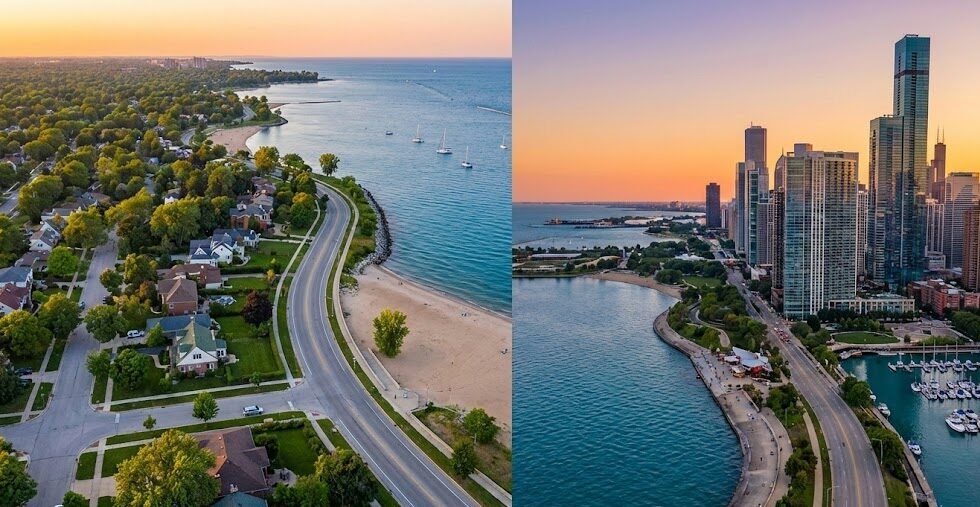
While headlines focus on established premium neighborhoods, savvy Chicago real estate investors are quietly accumulating properties in emerging areas poised for dramatic appreciation. These hidden gems offer the holy trinity of investment potential: affordable entry points, improving fundamentals, and early-stage gentrification momentum. For investors willing to look beyond Lincoln Park and the West Loop, Chicago’s lesser-known neighborhoods present exceptional opportunities to build wealth before the mainstream market catches on. Infrastructure improvements, new transit investments, and targeted city development initiatives are accelerating growth in these overlooked pockets. As new restaurants, retail, and mixed-use projects move in, demand from renters and first-time buyers continues to rise. Getting in early allows investors to benefit from appreciation, increasing cash flow, and favorable long-term positioning as these neighborhoods gain broader recognition.
The Investment Thesis: Why Hidden Gems Outperform
Chicago real estate investors targeting emerging neighborhoods follow a proven pattern. As Jeff Bushaw of Fulton Grace Realty explains: “An emerging neighborhood is where we’re seeing a shift happen before it hits the mainstream headlines, where prices are still lower than neighboring, more expensive communities.”
These fringe areas historically deliver sharper value increases than established markets. As demand spills over from premium neighborhoods, early investors capture appreciation that often exceeds 15% annually during peak growth phases. The key is identifying these areas during their transition period after initial improvements begin, but before prices fully adjust.
Top Hidden Gem Neighborhoods for 2025-2026
Bronzeville: The South Side Renaissance
Bronzeville stands as Chicago real estate investors’ most closely watched opportunity. This historic South Side neighborhood is experiencing a remarkable revival driven by the multibillion-dollar Bronzeville Lakefront development transforming the former Michael Reese Hospital campus, $19.2 million in INVEST South/West infrastructure investments, and a National Heritage Area designation, attracting cultural tourism.
Investment fundamentals:
- Median prices remain 40-50% below comparable North Side lakefront areas
- Historic greystone architecture offers unique renovation opportunities
- Strong rental demand from young professionals priced out of downtown
- Part of Chicago’s INVEST South/West initiative with major commercial corridor improvements
With steady appreciation since 2020 and continued growth projected, Bronzeville offers Chicago real estate investors an exceptional long-term appreciation play with meaningful rental income during the hold period
Avondale: The Next Logan Square
Avondale represents what Logan Square was 15 years ago, and that’s precisely why Chicago real estate investors are accumulating properties here. As Logan Square’s prices have escalated beyond many investors’ reach, Avondale provides access to the same Blue Line connectivity and Northwest Side culture at significantly lower price points.
Why investors are targeting Avondale:
- Pricesare significantly below those in neighboring Logan Square and North CenterThe
- Milwaukee Avenue corridor is attracting restaurants, breweries, and boutiques
- Blue Line accessibility provides downtown connectivity
- Strong multi-unit housing stock ideal for rental portfolios
Local agents report that Avondale inventory is “flying off the shelves” as Chicago real estate investors recognize the neighborhood’s trajectory. With average single-family prices of $500,000-$550,000 compared to $700,000+ in adjacent areas, the value proposition is compelling.
South Shore: Lakefront Value Play
South Shore offers Chicago real estate investors something increasingly rare: affordable lakefront property. While North Side lakefront neighborhoods command premiums of $1 million+, South Shore provides Lake Michigan access at a fraction of the cost.
Investment highlights:
- Direct lakefront with beaches and the South Shore Cultural Center
- Historic architecture and spacious lots are uncommon in newer areas
- Red Line accessibility for downtown commuters
- Rapidly improving safety metrics and community investment
As Chicago’s most affordable lakefront community, South Shore attracts real estate investors seeking properties with irreplaceable locational advantages. The neighborhood’s natural amenities create enduring value that transcends market cycles.
Uptown: The North Side’s Last Affordable Lakefront Option
Uptown has officially moved past “rough around the edges” into legitimate investment territory. Chicago real estate investors are drawn to this diverse North Side neighborhood for its rare combination of lakefront access, multiple transit lines (Red Line and Wilson station modernization), and still-reasonable entry prices.
The neighborhood’s 17.3% single-family home price increase between Q2 2024 and Q2 2025, the highest in Chicago according to DePaul University’s Institute for Housing Studies, confirms investor instincts. With ongoing commercial corridor improvements and the vibrant Argyle Street Asian district, Uptown offers cultural richness alongside investment returns.
Homewood: The South Suburban Star
Beyond city limits, Chicago real estate investors are discovering Homewood as the south suburbs’ most dynamic community. This village recorded a remarkable 44% year-over-year jump in detached home sales in August 2025, according to Mainstreet REALTORS® data.
Why Homewood works for investors:
- Walkable downtown with restaurants and shops
- Metra Electric Line provides downtown access
- Award-winning schools attracting families
- Historic homes with character at accessible price points
- Strong community engagement supporting property values
For Chicago real estate investors priced out of North Side suburbs, Homewood offers comparable amenities with stronger cash flow potential due to lower acquisition costs.
Addison: Western Suburban Growth
Addison in DuPage County has emerged as Chicago real estate investors’ western suburban target, with detached home sales rising 19% year-over-year. The village’s proximity to major expressways, low commercial vacancy rates, and recently renovated library indicate strong municipal management supporting property values.
Investment advantages:
Strategic location near Oak Brook and Elk Grove Village employment centers
Active park district and community amenities
More affordable than the surrounding DuPage County communities
Strong infrastructure investment supporting long-term growth
Investment Strategies for Hidden Gems
For Value Investors
Target 2-4 unit buildings in Humboldt Park and Avondale for immediate cash flow with appreciation upside. These properties provide rental income stability while neighborhood improvements drive equity growth.
For Appreciation-Focused Investors
Bronzeville and South Shore single-family homes offer the highest appreciation potential as revitalization accelerates. These areas require longer hold periods but promise significant equity gains.
For Suburban Diversification
Homewood, Addison, and West Chicago provide Chicago real estate investors with lower-risk, family-oriented rental markets that complement city portfolios.
Risk Management Considerations
Chicago real estate investors targeting hidden gems must conduct thorough due diligence:
- Block-by-block analysis: Conditions vary significantly within neighborhoods
- Crime trend verification: Ensure safety improvements are sustained
- Infrastructure commitment: Confirm ongoing municipal investment
- Rental demand assessment: Verify tenant interest before acquisition
The Window of Opportunity
As these neighborhoods transition from hidden gems to mainstream destinations, Chicago real estate investors face a narrowing window. Homewood’s 44% sales increase and Avondale’s rapidly disappearing inventory signal that the market is recognizing these areas’ potential.
For investors seeking the combination of cash flow, appreciation, and portfolio diversification that emerging neighborhoods provide, acting before 2026’s projected interest rate declines may prove crucial. When rates drop toward 6%, buyer competition will intensify, potentially eliminating the advantages that make these hidden gems attractive today.
Chicago real estate investors who identify and acquire properties in Bronzeville, Avondale, South Shore, and Uptown now position themselves to capture the full appreciation cycle before these neighborhoods complete their transition to established, premium markets.
Photo by Frolicsome Fairy on Unsplash