
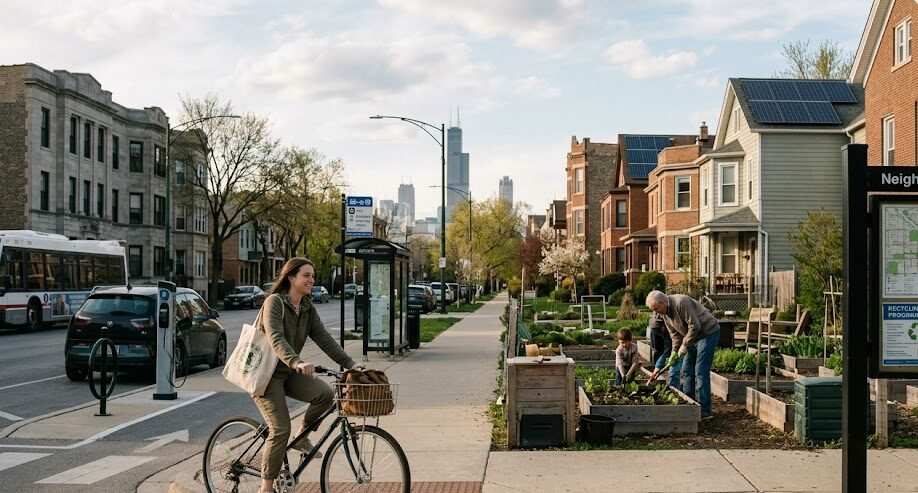
Understanding Sustainable Living in Chicago
Chicago has emerged as a leading metropolitan area in the pursuit of sustainable urban living. With a population exceeding 2.7 million residents, the city faces unique challenges in balancing economic growth with environmental responsibility. Sustainable living in Chicago encompasses reducing carbon footprints, supporting local economies, and fostering communities that prioritize ecological wellness alongside urban development.
The city’s commitment to sustainability is evidenced by its comprehensive climate action plan, which aims to achieve net-zero greenhouse gas emissions by 2040. This ambitious goal has catalyzed the development of green neighborhoods that serve as models for sustainable urban communities throughout North America.
Key Features of Green Neighborhoods
Green neighborhoods in Chicago are characterized by several defining elements that distinguish them from conventional residential areas. These communities prioritize environmental stewardship through thoughtfully designed infrastructure and community-driven initiatives.
Energy Efficiency and Green Building
Leading green neighborhoods incorporate energy-efficient building practices and LEED-certified structures. Residents benefit from improved insulation, renewable energy installations, and smart home technologies that significantly reduce energy consumption. Many buildings feature solar panels, green roofs, and advanced HVAC systems that minimize environmental impact while lowering utility costs for residents.
Transportation and Accessibility
Sustainable neighborhoods prioritize alternative transportation methods, reducing dependence on personal vehicles. These communities feature:
- Extensive public transit connections through CTA bus and rail lines
- Protected bike lanes and comprehensive cycling infrastructure
- Car-sharing programs and electric vehicle charging stations
- Pedestrian-friendly street designs that encourage walkability
- Mixed-use developments that reduce commute distances
Green Spaces and Urban Gardens
Access to natural spaces is fundamental to sustainable neighborhood design. Green neighborhoods incorporate parks, community gardens, and tree-lined streets that improve air quality, reduce urban heat island effects, and enhance residents’ quality of life. These green spaces provide recreational opportunities while supporting local biodiversity and ecosystem health.
Chicago’s Premier Green Neighborhoods
Lincoln Square
Lincoln Square has established itself as one of Chicago’s most environmentally conscious neighborhoods. The area features strong community engagement in sustainability initiatives, including active farmers markets that support local agriculture, numerous coffee shops and restaurants prioritizing sustainable sourcing, and well-maintained parks that serve as community gathering spaces. The neighborhood’s commitment to preserving historic architecture while incorporating modern sustainable upgrades demonstrates how environmental responsibility can coexist with neighborhood character preservation.
Pilsen
Pilsen represents a neighborhood undergoing significant sustainable transformation. Community-led initiatives have transformed vacant lots into productive urban gardens, providing fresh produce to residents while building social cohesion. Local organizations work to retrofit older buildings with energy-efficient systems, and the neighborhood’s vibrant arts scene has attracted young professionals committed to sustainable living practices.
Wicker Park
Wicker Park combines urban density with accessibility to green space through its proximity to the Chicago River and multiple parks. The neighborhood features active community organizations focused on environmental education, sustainable business practices among local retailers, and a strong culture of reuse and circular economy principles. Its walkable layout and excellent public transit access make it an attractive option for residents seeking to minimize their environmental footprint.
Logan Square
Logan Square has experienced significant development focused on sustainability and community resilience. The neighborhood features restored public spaces, including the iconic Logan Square Farmers Market, which supports local agricultural producers. Community-driven initiatives address food security, energy efficiency in housing, and equitable access to green amenities, making it a model for inclusive sustainable development.
Hyde Park
As home to the University of Chicago, Hyde Park benefits from institutional commitment to sustainability research and implementation. The neighborhood features green building initiatives, extensive tree canopy coverage, and waterfront access along Lake Michigan. Community programs focused on environmental education and conservation efforts demonstrate how academic institutions can anchor neighborhood sustainability efforts.
Community Initiatives and Programs
Urban Agriculture and Food Systems
Chicago’s green neighborhoods support robust urban agriculture programs that enhance food security and community resilience. Community gardens operated by residents produce fresh vegetables, fruits, and herbs while building neighborhood connections. These initiatives reduce food transportation distances, lower carbon emissions, and provide educational opportunities about sustainable agriculture practices.
Energy Efficiency Programs
The city of Chicago offers various programs supporting residential energy efficiency improvements. Weatherization assistance programs help residents reduce heating and cooling costs, while rebate programs encourage adoption of Energy Star-certified appliances and renewable energy installations. These initiatives make sustainable living more accessible across income levels.
Community Environmental Organizations
Numerous nonprofit organizations throughout Chicago’s green neighborhoods coordinate sustainability efforts. These organizations facilitate neighborhood clean-up events, organize educational workshops, advocate for environmental policies, and support residents in implementing sustainable practices. Their work creates networks of engaged citizens committed to continuous environmental improvement.
Challenges and Opportunities
Addressing Environmental Justice
While Chicago has made significant sustainability progress, ensuring equitable access to green neighborhoods remains a challenge. Historic patterns of disinvestment have concentrated pollution-generating industries and limited green space access in certain communities. Sustainable development must actively address these disparities through intentional investment, community engagement, and policies that prevent displacement of long-term residents.
Housing Affordability
Green neighborhoods often command premium housing prices, potentially excluding lower-income residents. Addressing this challenge requires developing affordable sustainable housing, implementing community land trusts, and creating policies that protect existing residents from displacement pressures associated with neighborhood improvements.
Future Growth and Expansion
As demand for sustainable living increases, Chicago has significant opportunity to expand green neighborhood models throughout the city. Continued investment in transit infrastructure, building retrofits, and community programs can extend sustainable living benefits to additional neighborhoods while supporting equitable development patterns.